A car accident can turn a normal day into a blur of pain, paperwork, and phone calls. If you were just in a crash in Decatur or anywhere else in DeKalb County, what you do in the next few hours and days can affect your health, your insurance claim, and any personal injury case you may need to file later.
This guide covers the practical steps to take after a car accident, what Georgia law says about your rights, and when it makes sense to bring in a personal injury attorney. Marks Law Group has helped injured drivers and passengers across Decatur and the greater Atlanta area sort through insurance companies, accident reports, and medical bills after a wreck. If you need help right now, call us for a free consultation, and we can talk through what happened.
Start Here
Move to safety, call 911, get medical attention even if you feel fine, exchange information with the other driver, document the scene, and get an accident report on file. Then be careful about what you say to insurance companies before you understand the full extent of your injuries and vehicle damage.
The rest of this article breaks down each of those steps, plus what Georgia law says about fault, deadlines, and your rights after a car accident.
Immediate Steps At The Scene
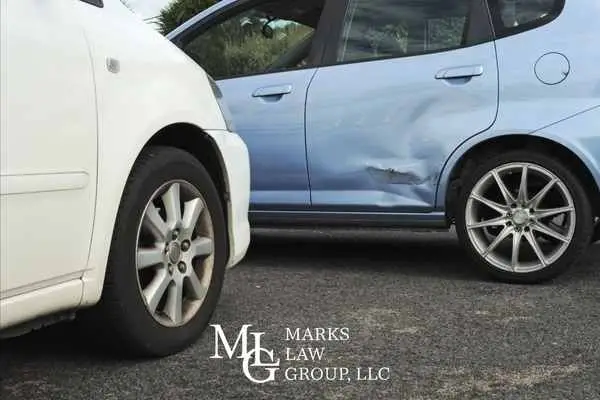
The minutes right after a crash are chaotic. A short mental checklist can help you protect yourself, both physically and legally.
- Check for injuries and move to safety. If your car is drivable and blocking traffic, move it to the shoulder. If anyone is hurt, do not attempt to move them unless staying in place creates more danger.
- Call 911. Report the accident and ask for police and, if needed, an ambulance. In Decatur, this may bring a DeKalb County Police Department officer or, on state routes and highways, the Georgia State Patrol.
- Exchange information. Get the other driver’s name, phone number, driver’s license number, license plate, and insurance information, including their policy number and insurance company name.
- Document the scene. Take photos of vehicle damage, skid marks, road conditions, traffic signals or traffic signs nearby, and any visible injuries. If a business or intersection has cameras, note the location. Traffic camera footage and nearby security footage can disappear quickly, so the sooner someone requests it, the better.
- Get witness statements. If bystanders saw what happened, ask for their name and phone number. A short note from a witness can matter later if the other driver disputes what happened.
- Wait for the accident report. The responding officer will typically complete a Police Report, often called an accident report or crash report. Note the officer’s name and badge number, and ask how to get a copy.
Get Medical Attention, Even If You Feel Fine
Adrenaline can mask pain for hours or days after a crash. Whiplash, concussions, and soft tissue damage do not always show symptoms right away, and internal bleeding in particular can be present with few outward signs, which is why emergency responders often recommend an evaluation even after a low-speed crash.
Seeing a doctor protects your health and creates medical documentation that connects your injuries to the accident. Wait a week or two, and an insurance adjuster may later argue that something else caused your pain.
Keep records of every medical examination, diagnosis, follow-up visit, and specialist referral. These records become the foundation of your claim for medical bills and other medical costs.
Document Everything
A car accident claim often comes down to evidence. Gather what you can early, without putting yourself at risk.
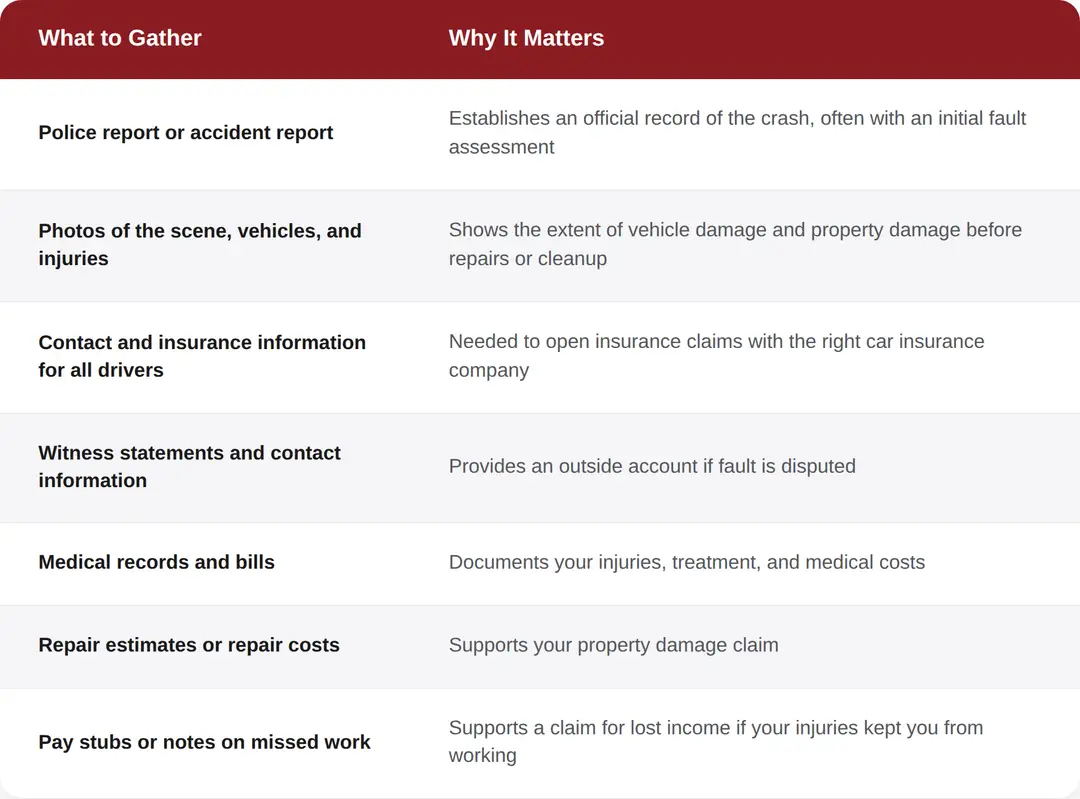
Keep digital copies of everything, including photos, the accident report, and any correspondence with insurance companies. Paper documents get lost easily, so a folder on your phone or in an email account works better.
Getting A Copy Of Your Police Report
In Decatur, Decatur police typically respond to crashes on local streets, the DeKalb County Police Department covers unincorporated parts of the county, and the Georgia State Patrol handles accidents on I-285, Highway 78, and other state routes nearby. Most crash reports can be requested online through Georgia’s statewide crash report portal, or in person through the responding department’s records unit. Reports are rarely available the same day. Plan on several business days before yours is finalized, longer for a truck accident involving trucking companies, since those often require additional investigation.
What To Say, And Not Say, To Insurance Companies
Expect a call from an insurance adjuster within a day or two, sometimes from your own auto insurance carrier and sometimes from the other driver’s. A few guidelines protect your claim:
- Report the accident to your own insurer, since most insurance policies require prompt notice.
- Stick to basic facts: date, time, location, and that a crash occurred. Save detailed statements until you know the full extent of your injuries.
- Do not guess about fault, even to be polite. Georgia’s fault rules are specific, and an offhand comment can be used against you later.
- Be cautious about giving a recorded statement to the other driver’s insurer before speaking with an attorney. Adjusters work for the insurance company, not for you.
- Do not accept a settlement offer until you understand the full cost of your treatment and repairs. Early offers are sometimes lower than what a claim is actually worth.
Avoid posting about the accident, your injuries, or your recovery on social media while your claim is open. Insurance companies do look.
Georgia Law On Car Accidents
A few rules under Georgia law shape almost every car accident claim in the state.
Statute Of Limitations
Georgia sets a deadline for filing a personal injury lawsuit after a car accident. Under O.C.G.A. § 9-3-33, most personal injury claims must be filed within two years of the accident date. Miss that window, and you generally lose the right to file a personal injury lawsuit over the crash, even if your case is otherwise strong.
Property damage claims and some other circumstances can carry different deadlines, so it is worth confirming the applicable timeline with an attorney rather than assuming.
Comparative Negligence
Georgia follows a modified comparative negligence rule. Under O.C.G.A. § 51-12-33(g), an injured person can recover damages as long as they are found less than 50 percent responsible for the accident, though their recovery is reduced by their own percentage of fault. If a court or insurance company finds you 50 percent or more at fault, Georgia law bars recovery entirely.
This rule is one reason it matters so much what you say, and don’t say, at the scene and to insurance companies. A statement that sounds harmless in the moment can shift how fault gets assigned later.
Common Causes Worth Knowing
Distracted driving remains one of the most common causes of car accidents in Georgia, along with speeding, following too closely, and failing to yield at traffic signals or stop signs. If the other driver was cited, or if the accident report notes a violation, that detail can support your claim.
Factors That Can Affect A Claim’s Value
No one can promise a specific dollar figure before reviewing the facts of your situation. Several factors generally influence how an insurance company or court evaluates a claim:
- The severity and permanence of your injuries, supported by medical documentation
- Total medical bills, including future anticipated treatment
- Lost income from missed work during recovery
- Vehicle damage and repair costs
- Whether fault is clear or contested between drivers
- Whether pain and suffering and other non-economic effects can be documented
- The available insurance coverage, including Bodily Injury Liability limits on the at-fault driver’s policy
An attorney can review the specific facts of your case and help you understand what evidence supports your claim, without promising an outcome that depends on facts still being gathered.
When Legal Proceedings Become Necessary
Most car accident claims in Georgia settle through insurance claims without a courtroom. Legal Proceedings, meaning a filed lawsuit, typically become necessary when the insurance company denies the claim or disputes fault, the settlement offer falls far short of covering medical costs and lost wages, the at-fault driver was uninsured or underinsured, or the case involves a serious injury, permanent disability, or Wrongful Death.
Filing suit does not always mean going to trial. Many cases still resolve through negotiation or mediation afterward, but having that option preserved matters, which ties back to the two-year filing deadline above.
How A Personal Injury Attorney Can Help
A personal injury attorney does more than send a demand letter. Depending on the case, that includepersonal injury attorneys:
- Reviewing the accident report and gathering additional evidence, including witness statements and available camera footage
- Communicating with insurance adjusters so you are not managing that alone while recovering
- Organizing medical documentation to support the full value of your claim
- Evaluating settlement offers against your actual costs and losses
- Filing a personal injury lawsuit if a fair settlement cannot be reached before the statute of limitations runs
Marks Law Group has represented injured people throughout Decatur, DeKalb County, and the greater Atlanta area, including car accidents and rideshare accidents. We work on a contingency basis, which means the case gets built around your interests, not an insurance company’s bottom line.
Talk To Marks Law Group About Your Case

Sorting through medical bills, an insurance adjuster, and a damaged car is a lot to manage after a car accident, especially while you are still recovering. If you were hurt in a crash in Decatur or anywhere in DeKalb County, reach out to Marks Law Group for a free consultation. We can review what happened and help you understand your options, at no cost to start the conversation. Call us at (678) 500-8766 today.
Frequently Asked Questions
Do I have to call the police after a minor car accident in Decatur?
Georgia law generally requires drivers to report accidents involving injury, death, or significant property damage. Even in a minor collision, a Police Report on file protects you if the other driver later disputes what happened.
What if the other driver does not have auto insurance?
Georgia requires drivers to carry minimum liability coverage, but not everyone complies. If the at-fault driver is uninsured or underinsured, your own policy’s uninsured motorist coverage, if you have it, may apply.
How long do I have to file a claim after a car accident in Georgia?
Under O.C.G.A. § 9-3-33, most personal injury claims must be filed within two years of the accident date. Property damage claims can carry a different timeline, so confirm your specific deadline rather than assume it matches.
Will accepting the insurance company’s first offer hurt my claim?
It can. Early offers are sometimes made before the full extent of injuries and costs is known, and once you accept, you generally cannot go back and ask for more later.
Does a criminal record affect my personal injury case?
Generally, an unrelated criminal record has limited relevance to a car accident claim, which usually turns on who was negligent in causing the crash.